

beesrg.org

Check out the projects powered by the BEESRG community

Access the member directory to consult their profiles simply and efficiently

whatsapp image 2026 01 30 at 15.47.35 (1)

 YATAHAI CLEMENT MINEO

Research topic: Influence of four phytosanitary products used in agriculture on Apis mellifera and honey in the Vina Division (Adamawa – Cameroon).

Bref résumé du travail : L’objectif de ce travail est de ressortir le profil toxicologique des néonicotinoïdes et leur mécanisme d’action sur l’abeille mellifère.  Pour cela, les abeilles ont été réparties en quatre lots de 10 répétés trois fois : Le premier lot, témoin, a reçu de l’eau glucosée non contaminée, tandis que les trois autres ont reçu cinq doses croissantes de solutions d’acétamipride, d’imidaclopride et de thiaméthoxame par deux voies : orale et topique. Les analyses ont révélé que les produits chimiques utilisés ont influencé chez les abeilles les paramètres neurobiochimiques (protéines totales, l’acétylcholine et la dopamine) et les facteurs du stress oxydant 

Master 2 – Écotoxicologie | Matricule : 21A234FS

whatsapp image 2026 01 30 at 15.47.34

MAHAMAT ABAKAR

Research topic: Analysis and modelling of the simultaneous effects of anthropogenic activities and climate on insect diversity.

Bref résumé du travail : Cette étude évalue l’impact conjugué des activités anthropiques et des fluctuations climatiques sur la diversité des insectes. Les analyses et le modèles développés permettent de mieux comprendre les dynamiques écologiques locales et d’orienter les actions de conservation.     

Master 2 – BOA (Biodiversité et Services Écosystémiques )| Matricule : 17B413FS

whatsapp image 2026 01 30 at 15.47.32 (1)

ROUKAYATOU AMBAL SAIDA

Research topic: Modelling the impact of insect pests on cocoa (Theobroma cacao) in the East Region of Cameroon.

Bref résumé du travail : Cette étude évalue l’impact des insectes ravageurs sur la productivité du cacao dans la région de l’Est Cameroun et promeut l’utilisation d’un biopesticide à partir des extraits de tabac en comparaison des pesticides chimiques disponibles sur le  marché. Les analyses et le modèle développé ont permis de contribuer à la protection de l’environnement par le biais des connaissance écologiques et mathématiques. 

Master 2 – Écologie (Agriculture durable et écotoxicologie) | Matricule : 17A745FS

whatsapp image 2026 01 30 at 15.47.35

TIADOUM YANMITA

Research topic: Influence of four phytosanitary products used in agriculture on Apis mellifera and honey in the Vina Division (Adamawa – Cameroon).

Brief summary of the work:

Our study enabled us to evaluate the effects of four chemical pesticides (acetamiprid, cypermethrin, chlorpyrifos-ethyl and glyphosate), which are among the most widely used in agriculture, on Apis mellifera and honey in our study site.

  1. The identification technique using thin layer chromatography (TLC) revealed the presence of these four pesticides in our samples.

  2. Toxicity tests carried out showed that the four pesticides are toxic to Apis mellifera, exhibiting symptoms of neurotoxicity and cases of individual mortality after ingestion and direct application at different concentrations of these phytosanitary products.

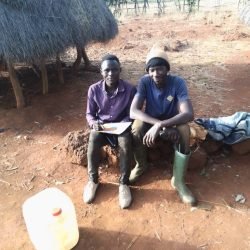


Master’s Degree (M2) – Ecology (Ecotoxicology) | Registration Number: 16B205FS

6

MAGO TEDONGMOUO DANIELLA


Research topic: Impact of the foraging activity of two Apoids on the yield of Gossypium hirsutum (Malvaceae) in Dang (Ngaoundéré, Cameroon).Research topic: Impact of the foraging activity of two Apoids on the yield of Gossypium hirsutum (Malvaceae) in Dang (Ngaoundéré, Cameroon).

Brief summary of the work:

This study evaluates the impact of insects, including Apis mellifera and Amegilla sp., on the fruit and seed production of Gossypium hirsutum. The analyses show that insects in general, particularly A. mellifera and Amegilla sp., increased the fruiting rate, the average number of seeds per capsule, and the percentage of normal seeds.

Through the pollination efficiency of one and two floral visits, A. mellifera and Amegilla sp. led to a significant increase in the fruiting rate, the percentage of seeds per capsule, and the percentage of normal seeds.

Master 2 – BOA (Entomologie)| Matricule : 14B104FS

whatsapp image 2026 01 30 at 15.47.40

DAVID

Research topic: Contribution to the knowledge of honey hunting with the help of Indicator indicator (Indicatoridae) and traditional beekeeping in the Adamawa Region, Cameroon.

Brief summary of the work:

This study evaluates the role of the cooperation between humans and the honeyguide bird (Indicator indicator, the greater honeyguide) in the Adamawa Region of Cameroon.


Master 2 – Écologie Écologie ( écologie comportementale) | Matricule :17A588FS

6

MAGO KAFFO DIANE

Research topic: Effects of land-use intensity on insect diversity and functional composition in agroecosystems.

Brief summary of the work:

This study aims to analyze the impact of different intensities of agricultural practices, particularly the high use of chemical inputs, on insect communities present in agroecosystems.

Master en cours –  BOA | Matricule : 18A756FS

6

FEVOURBE PALLAÏ PAGORE

Research topic: Inventory of hive parasites and evaluation of their damage on honey quality in the Vina Division (Adamawa – Cameroon).

Brief summary of the work:

This study evaluates, following an inventory of hive parasites, the synergistic impact of hive beetles and wax moths on the microbiological and physicochemical quality of honey. The analyses revealed that species sharing the habitat of honey bees (Apis mellifera) have negative effects on the microbiological and physicochemical quality of honey.


Master’s Degree (M2) – BOA (Apidology and Parasitology) | Registration Number: 20A309FS

6

AWE JOSEPH

Research topic: Production performance of domestic chickens subjected to a diet supplemented with bee bread and/or propolis.

Brief summary of the work:

This study evaluates the alternative use of bee bread and propolis as substitutes for antibiotic growth promoters in poultry production, with the aim of contributing to its sustainable improvement. These two products, known for their significant nutritional and/or therapeutic potential, possess properties that vary depending on the floral origin of their base materials and their geographical origin. Therefore, it is important to explore the various benefits of those originating from our geographical area for animal production in general and poultry production in particular.

PhD – Animal Production (Animal Feeding and Nutrition / Microbiology) | Registration Number: 14A741FS


6

YAOUBA AHAMADOU

Research topic: Evaluation of the impact of pesticides on Daphnia magna Straus 1820 and modelling of their long-term effects in the Vina Division (Adamawa, Cameroon).

Bref résumé du travail : Cette étude met en évidence les

Brief summary of the work:

This study highlights the harmful effects of pesticides on aquatic organisms and emphasizes the need for stricter regulation of their use. The analyses and the developed model predict a progressive decline in the population of Daphnia by the fifth year.


effets néfastes des pesticides sur les organismes aquatiques et souligne la nécessité d’une régulation stricte de leur utilisation. Les analyses et le modèle développé prédit un déclin progressif de la population de daphnies au cinquième année

Master’s Degree (M2) – Ecology (Ecotoxicology) | Registration Number: 19A063FS


6

BONE SILIMAN SILIMAN

Research topic: Effects of insecticides on the biodiversity of mesofauna (case of Collembola) in Dang (Ngaoundéré, Cameroon).

Brief summary of the work:

This study demonstrated the harmful effects of the uncontrolled use of pesticides on non-target organisms and the risk of disrupting nutrient cycling, highlighting the need to promote sustainable agriculture.

Master’s Degree (M2) – Ecology and Ecotoxicology | Registration Number: 08M633FS


6

SOUMAYA

Research topic: Analysis of chemical pesticide residues in honey from the Mbéré Division (Adamawa, Cameroon) and evaluation of their effects on the health of honey bees Apis mellifera (Hymenoptera: Apidae).

Brief summary of the work:

This study highlights the presence of various chemical pesticides in honey from the Mbéré Division and their impacts on the health of honey bees (Apis mellifera).

Master’s Degree (M2) – BOA (Apidology) | Registration Number: 17A745FSMaster’s Degree (M2) – BOA (Apidology) | Registration Number: 17A745FS

6

ZOURMBA DAWAI

Research topic: Effect of Glyphosate and Paraquat on soil biodiversity and evaluation of their toxicity on Folsomia candida (Collembola: Isotomidae) in Dang (Ngaoundéré – Cameroon).

Brief summary of the work:

This study evaluated the effect of the active ingredients of two herbicides, Glycol 41% SL (Glyphosate) and Aproxone 200 SL (Paraquat), on macrofaunal biodiversity in the field and determined their toxicity on collembolans under laboratory conditions in the locality of Malang, Dang. Considering the harmful effects of these herbicides on non-target organisms, it would therefore be advisable to reduce their use in order to preserve soil biodiversity.

Master’s Degree (M2) – Ecology (Sustainable Agriculture and Ecotoxicology) | Registration Number: 12A472FS

6

HAMADOU MOCTAR

Research topic: Impact of hive beetles on the microbiological quality of some honeys from the Vina Division (Adamawa – Cameroon).

Brief summary of the work:

This study was carried out to investigate the impact of beetles on the microbiological quality of honey from the localities of Vina (Dibi, Nyambaka, Hangloa, and Likok). In this context, the beetle species Aethina tumida, Oplostomus furigineus, and Oplostomus haroldi were captured in hives and identified in the laboratory.

Regarding the microbiological analyses of honey, the total aerobic mesophilic flora was found to be most prevalent in hives from Nyambaka compared to those from Dibi, Hangloa, and Likok. For yeasts and molds, honey samples from Nyambaka and Hangloa were the most contaminated.

Based on these findings, improved apiary hygiene and the installation of beetle traps were recommended to enhance the sanitary quality of honey.

Master’s Degree (M2) – Biology of Animal Organisms (Entomology) | Registration Number: 14A648FS

6

HASSANA  BOUBAKARI


Thème de recherche : 

Bref résumé du travail : 

Master’s Degree (M2) – Floral Ecology | Registration Number: 12A830FS

6

BISSOU

Thème de recherche : 1)Évaluation des risques des pratiques phytosanitaires et de screening des résidus de quatre (04) produits agrochimiques (glyphosate, acétamipride, le chlorpyrifos et la cyperméthrine) dans quelques denrées agricoles de la Vina (Adamaoua, Cameroun) 

2)Caractérisation Structurale des systèmes rizicoles et évaluation des doses d’engrais minéral sur quatre nouvelle

Brief summary of the work:

The study reveals a high contamination of food products by cypermethrin, acetamiprid, and chlorpyrifos-ethyl, highlighting the urgent need to reduce chemical inputs in favor of biological and environmentally friendly practices.

The study conducted in Lagdo also shows that rice farmers, predominantly men with a low level of formal education, mainly use local seeds and chemical fertilizers. Among the varieties tested, RL1, RL2, and RL3 from AfricaRice demonstrated the best adaptability.

Master’s Degree (M2) – BOA (Ecotoxicology) | Agricultural Engineer (Option: Crop Production) | Registration Number: 16A907FS


6

GUISWE

Research topic: Floricultural entomofauna and its impact on the yield of Vigna unguiculata (Fabaceae) variety Feekem at the Plant Material Multiplication Farm of MINADER in Ngaoundéré (Adamawa, Cameroon).

Brief summary of the work:

This study highlights the diversity of floricolous insects visiting the flowers of Vigna unguiculata on the farm and their contribution to crop yield. The analyses show that floricolous insects overall increased the fruiting rate, the percentage of seeds per pod, and the percentage of normal seeds.

Through the pollination efficiency of a single floral visit, Apis mellifera significantly increased the fruiting rate, the percentage of seeds per pod, and the percentage of normal seeds.

Master 2 – BOA(Entomologie agricole) | Matricule : 14A594FS